
Before the Difficult Conversation Guide - Steal this guide for free
There's a conversation you've been avoiding.
You know the one. It sits in your chest. You rehearse it in the shower. You almost bring it up — then don't.
Maybe it's with someone you lead. Maybe it's with your boss. Maybe it's with someone you love.
The words are there. But something's missing.
Here's what I've learned: the barrier to difficult conversations isn't usually what to say. It's how we need to feel before we can say it.
Confident enough. Safe enough. Brave enough. Clear enough.
Until we feel those things, the conversation stays stuck.
This week's Beautiful Question:
What do you need to feel more of to be able to have this difficult conversation?
It's a question worth sitting with.
Not "what should I say?" — but "what do I need to feel first?"
Because when you know that, you can start building toward it. And the conversation that felt impossible starts to feel possible.
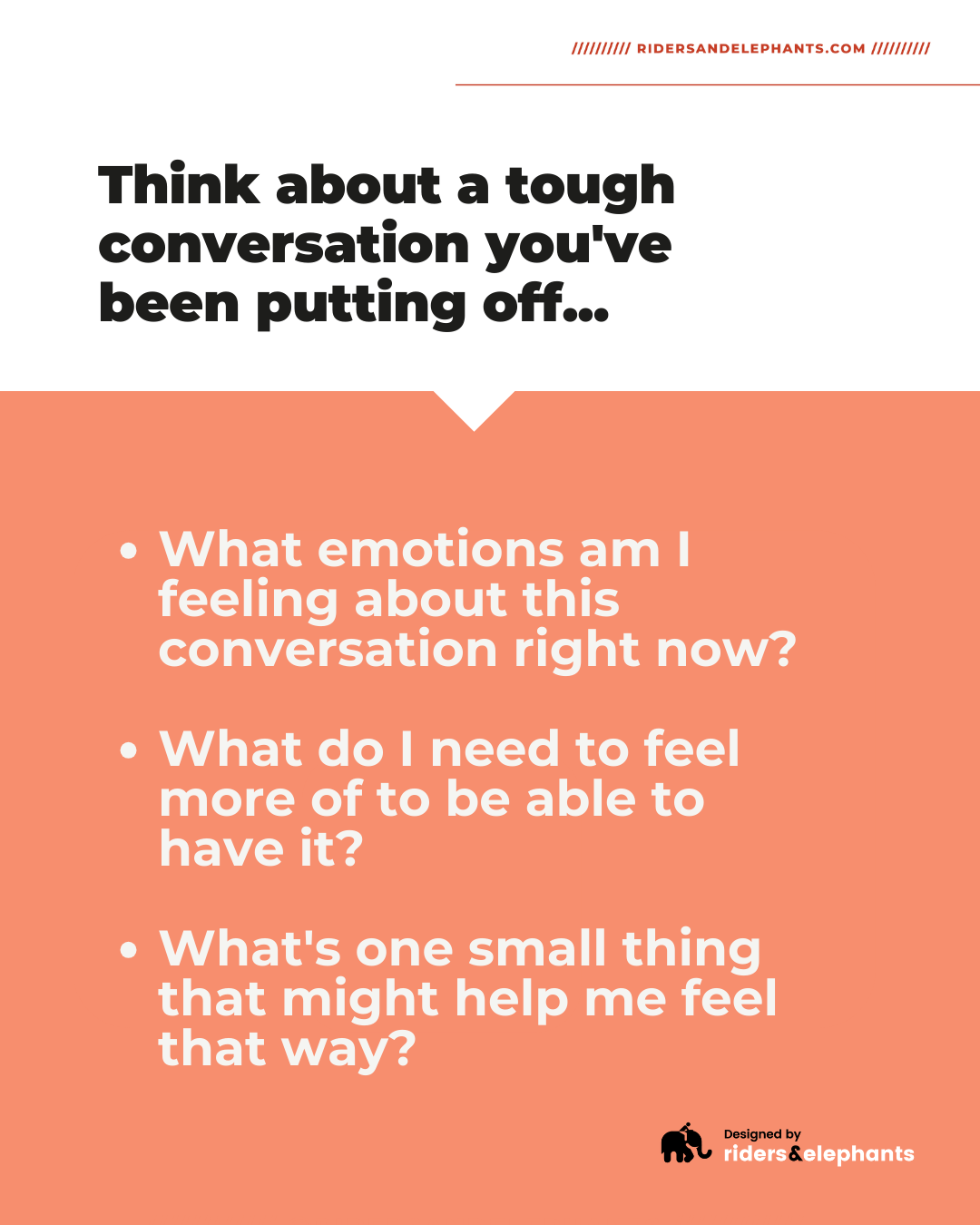
A simple exercise:
Think about a conversation you've been putting off.
Now ask yourself:
- What emotions am I feeling about this conversation right now?
- What do I need to feel more of to be able to have it?
- What's one small thing that might help me feel that way?
Sometimes naming it is enough to shift it.
A free conversation tool for you

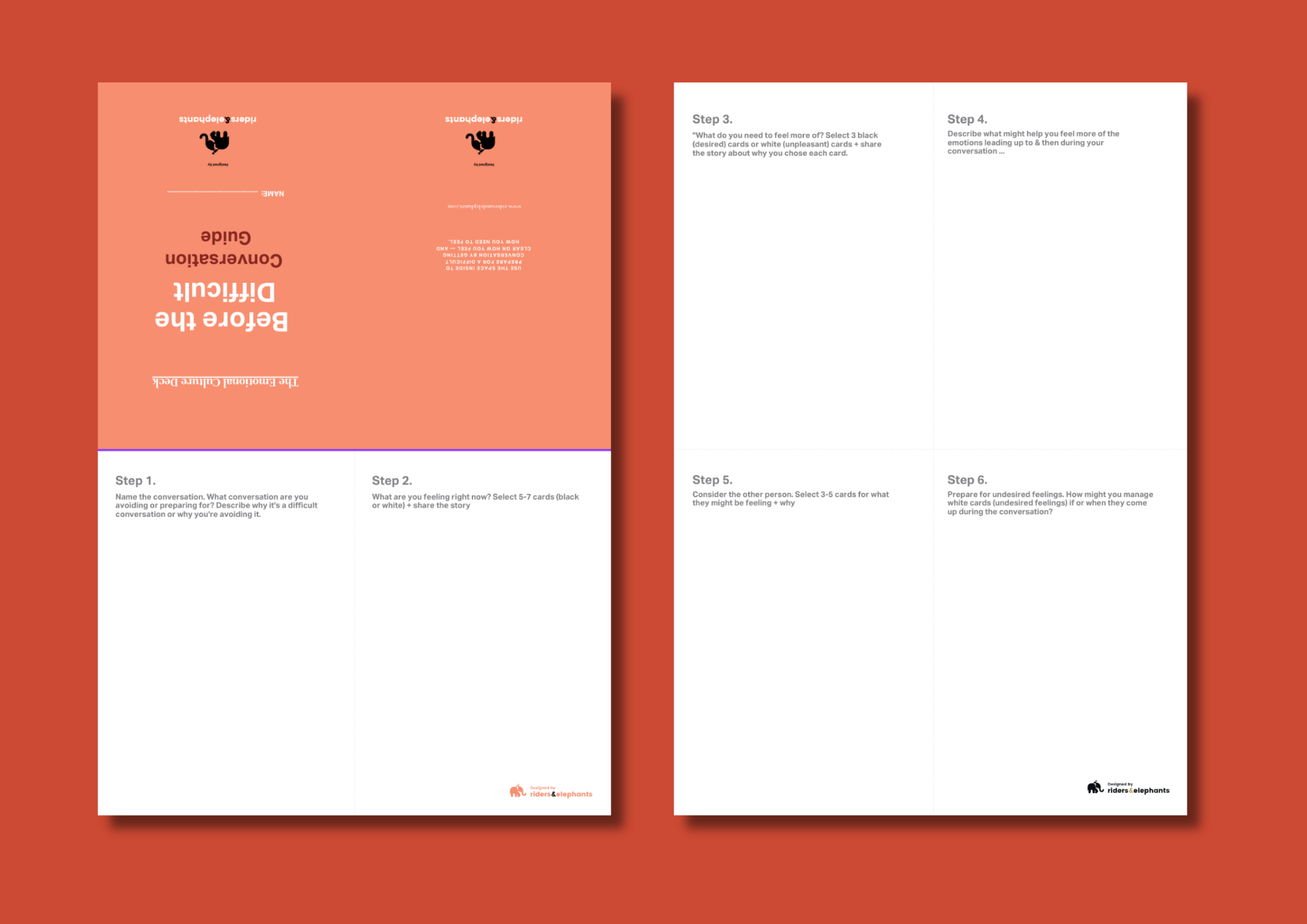
I've created a simple one-page guide to help you work through this in a more structured & detailed way. Whether for yourself, in a 1:1, or with someone you're supporting through a difficult moment.
Download the Before the Difficult Conversation Guide →
Don't have The Emotional Culture Deck yet? Download the free ECD PDF here → — it complements every tool we design, share, and teach.
Why do we give this away?
I've always admired the companies that gave me simple tools I could actually use — not hidden behind a paywall, but free to share with my team, my clients, and anyone who needed them.
We've done this since the very beginning of R&E eight years ago, and it's become part of our DNA.
So please share this page with anyone you think would benefit from this conversation right now (or in the future).
From our community:
Lisa used our Difficult Conversations Handbook with two colleagues whose working relationship was in danger. "I believe doing the canvas helped the flow of the conversation... it helped both people be open with themselves and each other. To gain the strength they needed and the willingness to be open."
The guide we're sharing today is a mini version of the tool Lisa used — a simple starting point for your own difficult conversation.
The conversations we avoid don't go away. They just get heavier.
But you don't have to feel ready to start. You just have to know what ready would feel like — and take one step toward it.
What conversation have you been carrying?
— Jeremy
P.S. This is the first in a new weekly series — one Beautiful Question, one conversation, one small tool to help you lead with more emotional awareness. Every Thursday. I hope it's useful.
