
5,000 staff, eight hospitals and one small thank you: how Mel Warhurst brought The Emotional Culture Deck into the Southern DHB
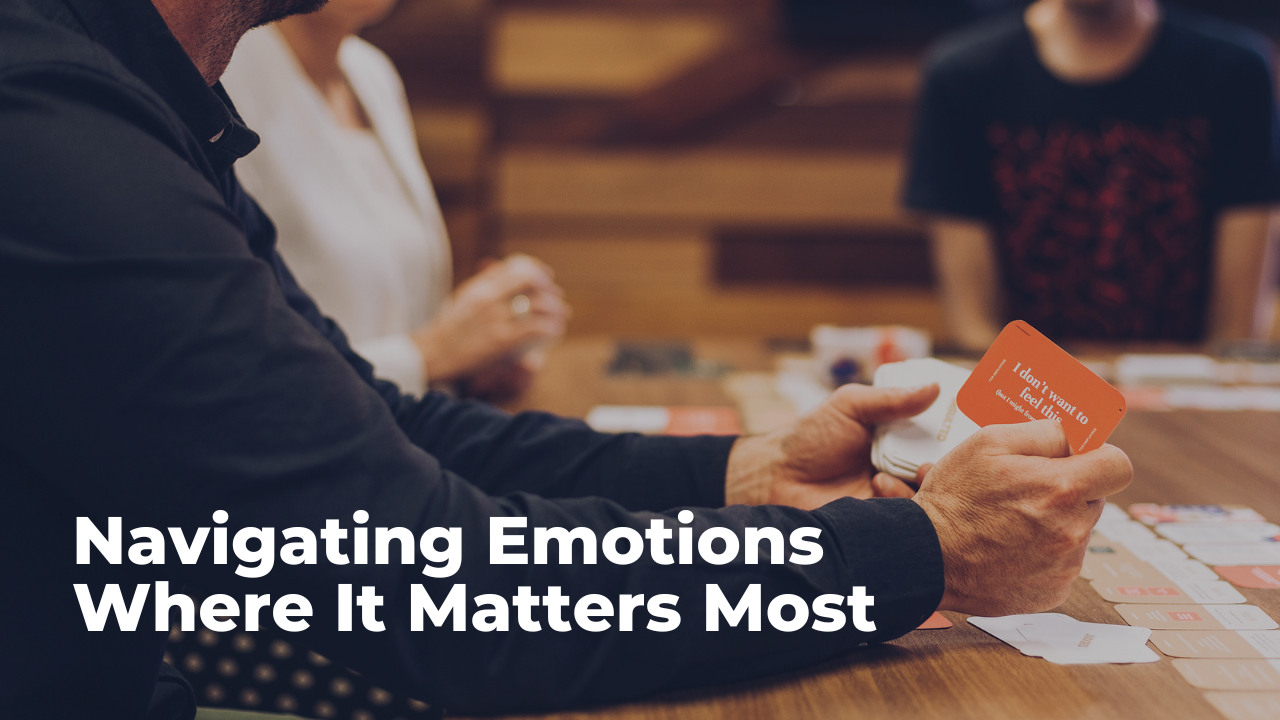
People often ask Jeremy whether The Emotional Culture Deck would work for doctors, for a hospital, for a district health board.
His answer is always the same. Those places are made up of humans, just like every other team he's played the game with. What he hasn't had is a story to point to. Then Mel Warhurst started posting her workshops.
Mel is an Organisational Development Specialist at the Southern District Health Board in New Zealand. Within months of becoming an Elephant Rider this year, she worked her way up to Silver, running workshop after workshop inside the DHB. This week she shared what she's learned at our first Virtual Elephant Rider Gathering, with the support of her senior leaders.
Want to Watch the Full Conversation?
These highlights capture a glimpse of Mel's talk and the Q&A that followed.
Join our Elephant Rider Community by enrolling in one of our ECD Specialist Courses to unlock the full replay and learn directly from courageous leaders who are using The Emotional Culture Deck to flip workplaces around the world.
→ Join an ECD Specialist Course here
Already a paying Elephant Rider Member? You can watch the full replay here →
A health board twice the size of Belgium
Mel set the scene in her own numbers. The Southern DHB has just over 5,000 staff across eight hospitals, serving a widely spread community over an area she described as twice the size of Belgium. Teams are dispersed, patients are dispersed, and the travel between hospitals is huge.
On top of that sits everything health is carrying right now. Demanding work where nobody knows who the next patient will be. Staff shortages with the borders closed. Shift work that makes it hard to get one team in one room. A new hospital rebuild coming. COVID-19, eighteen months in, with the rules changing all the time. And the merger of every district health board in the country into one, due next year.
Most of that is out of anyone's control. So that's where Mel started.
Top Highlights from Mel's Story
1. Start with what you can control
Mel used The Emotional Culture Deck to help teams find the part of their culture they could change. She worked mostly with frontline teams, the people staff spend their day with, so the change could happen in the team around them.
"It's showing individuals that they can actually influence, and it gives them that responsibility to create that desired culture."
2. Meet each team where it is
Mel matched the game to where each team was in its development, using the stages of forming, storming, norming and performing.
Forming. When 50 people came together as a new vaccination team, from health roles and support roles alike, Mel had them design their culture from the very start: the feelings they wanted, and the rituals and actions they'd commit to. The poster went up on the wall. As the project came to an end, the team said it had been one of the best teams they'd ever worked in, particularly in the health sector.
Storming. Mel was clear about the language here.
"Some people might call these teams dysfunctional. Personally, we don't like that word, because the teams are still functioning. They're just not functioning at their best."
With one team that had been through a lot of change in its people and its leadership, she ran a first workshop with the original team members, with their leaders in the room, before bringing the whole team together.
Norming and performing. These teams worked through the full canvas and kept checking in, moving their dots towards the culture they wanted.
3. Weave it into what's already there
Mel paired the cards with practices the hospital already used. She ran a sailboat retrospective with them. She used them as a check-in at the start of workshops, so facilitators and managers could see how a team was feeling. And she built them into a change workshop: everyone picked three cards for a change they were living through, learned the stages of a change cycle, then used their cards to find where they were in it and what would help them move forward.
4. The smallest change can be the biggest
Under pressure, teams could name the culture they wanted and the one they didn't. Finding rituals and actions was where they got stuck. Mel learned to celebrate the small ones. One team wanted acknowledgement, so they agreed to say thank you when a colleague had covered their patients during a break.
"It sounds like the smallest thing, but when you're worried about that next patient and just moving, you know, on to help someone else, just saying thank you to your colleague wasn't happening, and just those small things are making such a difference."
5. Feelings bring emotion, and teams hold each other
There were tears in a lot of workshops. Mel's job as facilitator was to acknowledge them, wrap empathy and support around the person, and keep the workshop moving. What she found was that teams wrapped around each other too. And for staff who never stop, the session itself became a rare pause to check in with how they were feeling.
6. When the leader picked "powerless"
Asked whether she'd seen psychological safety improve, Mel said yes, and told the story of a team that had been blaming its leadership. In the workshop, the most senior leader in the room picked the white card "powerless" and explained why.
"You could almost just see everyone in the room feel that empathy towards that leader as well."
The team understood that their leaders were doing the best they could, and that they could change things too. Trust in that team grew from there.
7. Buy-in grows once people see it
Mel found the game hard to explain before people had seen it run. Once teams had used it, word spread. Managers came on board, found ways to bring dispersed teams together, and started choosing the emotional culture workshop for their teams.
She also shared one lesson everyone can use. Right before a workshop for 50 people, she and a colleague accidentally mixed up three packs of cards, and ended up sorting them on the floor in a game of snap. Their cards now carry dots so they can sort them quickly.
🔚 8. Her message to fellow Elephant Riders
Mel closed by checking in on her own feelings about the work: courageous, proud, inspired and optimistic. And she left everyone with this.
"Understanding that you as one individual and as a small team within such a big organisation can actually make a difference to how your culture is, and how your team's feeling."
We feel so grateful to Mel for showing us what The Emotional Culture Deck can do inside a health system. Next time someone asks whether it works in health, this is the story we'll point to.
Start free. See for yourself why The Emotional Culture Deck is changing how people and teams master their emotions. Our free PDF version is a simple, no-obligation way to cut and care.
Download here now →
The Deck, the whole Deck and nothing but the Deck. Our free Emotional Culture Deck PDF version includes everything you'd get in the physical Deck. All the cards. All the emotions. All the simplicity. All you need to bring it to life is a printer and a pair of scissors. Download. Print out. Cut up & Play now.
