
Six months live: what our Emotional Evidence Platform has gathered so far
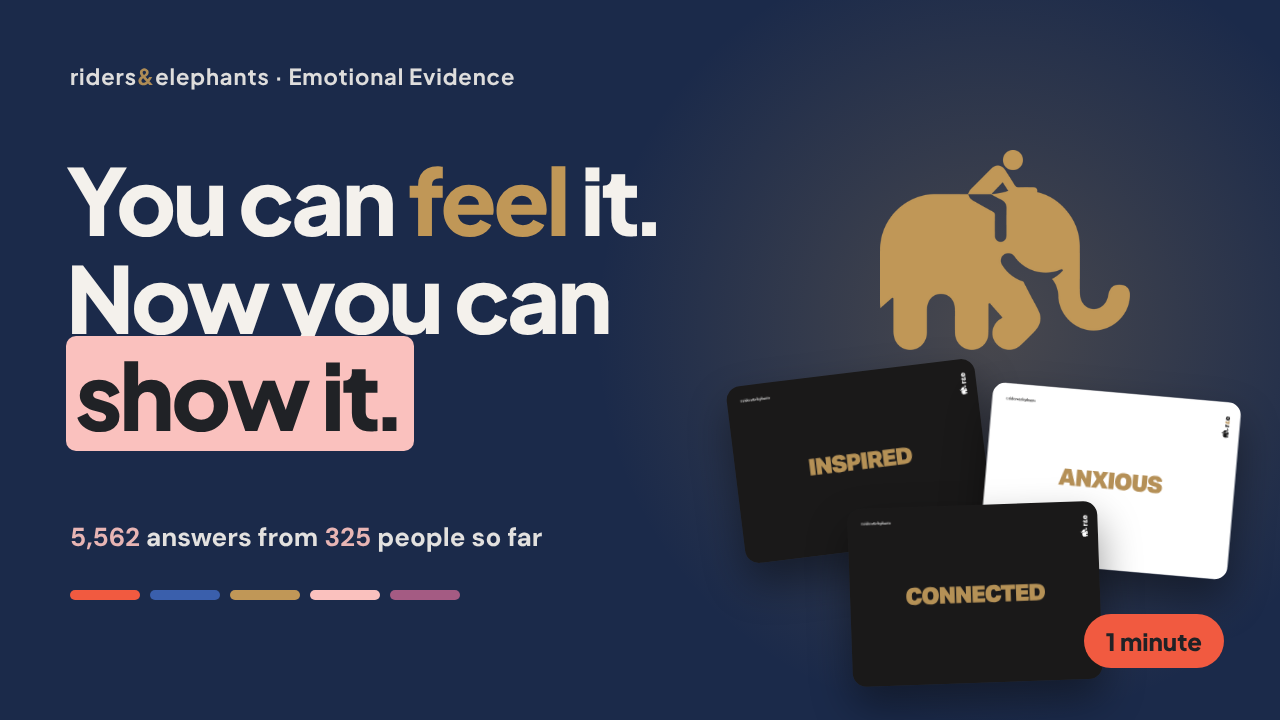
You can feel it when an emotional culture conversation lands.
A leader goes quiet, then says, “I didn’t know it felt like that for you.” Someone names a feeling they have carried for months. People stay behind afterwards because they don’t want the conversation to end.
For a long time, that feeling was all we had. And you can’t hand a feeling to the people deciding what happens next.
So at the end of March we switched on version 0.5 of the Emotional Evidence Platform, with a small group of early users. Six months on, I want to share what it has gathered, how fast it got there, and what it is starting to tell us.
The platform in one minute. Turn the sound on.
Why we needed it
I feel this is one of the strangest things about our work. The conversations that shape how a team feels, whether people trust each other and whether they will speak up when something is wrong, are the ones we have found hardest to prove.
We measure almost everything else. Attendance, completion, how much people enjoyed the day. None of it tells you whether anything moved. We wanted the people running these conversations to walk out with evidence, not just a good feeling.
What version 0.5 does
The Emotional Evidence Platform measures the outcomes of emotional culture conversations. It was developed alongside academic research with Professor Michael Parke at the Wharton School.
It is simple on purpose.
- One QR code at the end of any engagement. People scan it on their phone.
- Eighteen short questions, about two minutes. Each one asks what has moved since the work began.
- Fully anonymous. Answers are only ever shown in aggregate.
- The Impact Report builds itself. The person who ran the engagement sees what moved in their room.
Six months live, and the scale already
The evidence so far, to 24 September 2026
5,562answers |
325people |
60engagements in 29 organisations |
15early users running it |
Read from the platform database. Anonymous and aggregated.
Since the end of March, 15 early users have run the platform in their own rooms. Add the first answers we gathered before launch, and the collection now stands at 5,562 answers from 325 people, across 60 engagements inside 29 organisations, in at least seven countries.
That is six months, a handful of early users, and a version we still number 0.5. I feel the scale says something about how much people want to be asked.
The impact so far
We asked people what had improved since the work began. Here is how many reported some improvement.
- 92% in understanding other people’s emotions
- 89% in understanding their own
- 84% in raising tough issues
- 82% in feeling connected to their team
- 81% in trust,
- 81% in psychological safety,
- 77% in sharing their own difficult emotions
- 66% on loneliness, and 57% on burnout
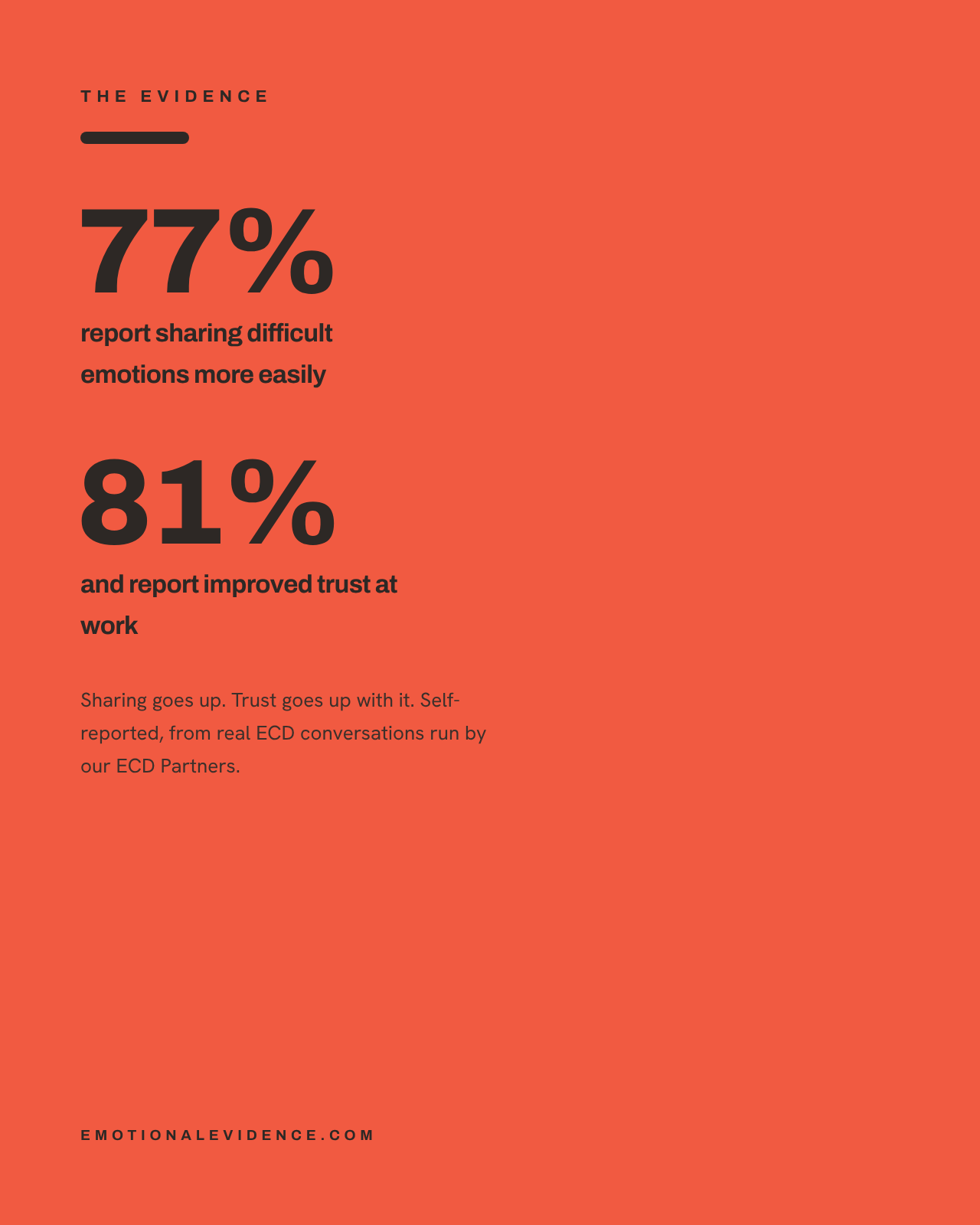
Here is the unexpected truth. When people share their difficult emotions more easily, trust goes up with it. We are taught that naming the hard feelings at work is risky. Our evidence says it builds the very thing we were afraid of losing.
The pattern has held from July to now. This work changes how people see emotion fastest. The heavier outcomes, like loneliness and burnout, move more slowly. Those are the numbers we are watching most closely, and we share them even when they are lower.
Behind every one of those data points is a human being, telling us how their team feels now compared with before.
See the platform and the latest numbers »
What could this change for you?
Picture the next time someone asks what your culture work achieved. Instead of describing how the room felt, you show them what moved.
That is what we are building towards. The human side of work stops being the soft part that is easy to cut, because it finally has evidence behind it.
The platform is invite-only at this stage. We are in early testing with our ECD Certified Consultants and Masters, and it will open more widely in time.
So next time, you bring the evidence, not just the feeling.
